

Every Victron power system we install is built around a GX device — a Cerbo GX or similar. It’s easy to think of it as just a screen, but it’s really a small network computer. Its main job is to give a human-friendly interface into what the system is doing, and to export telemetry up to Victron’s VRM portal, which is what lets anyone with a login check on a PV system’s performance from anywhere in the world, on their phone or laptop.
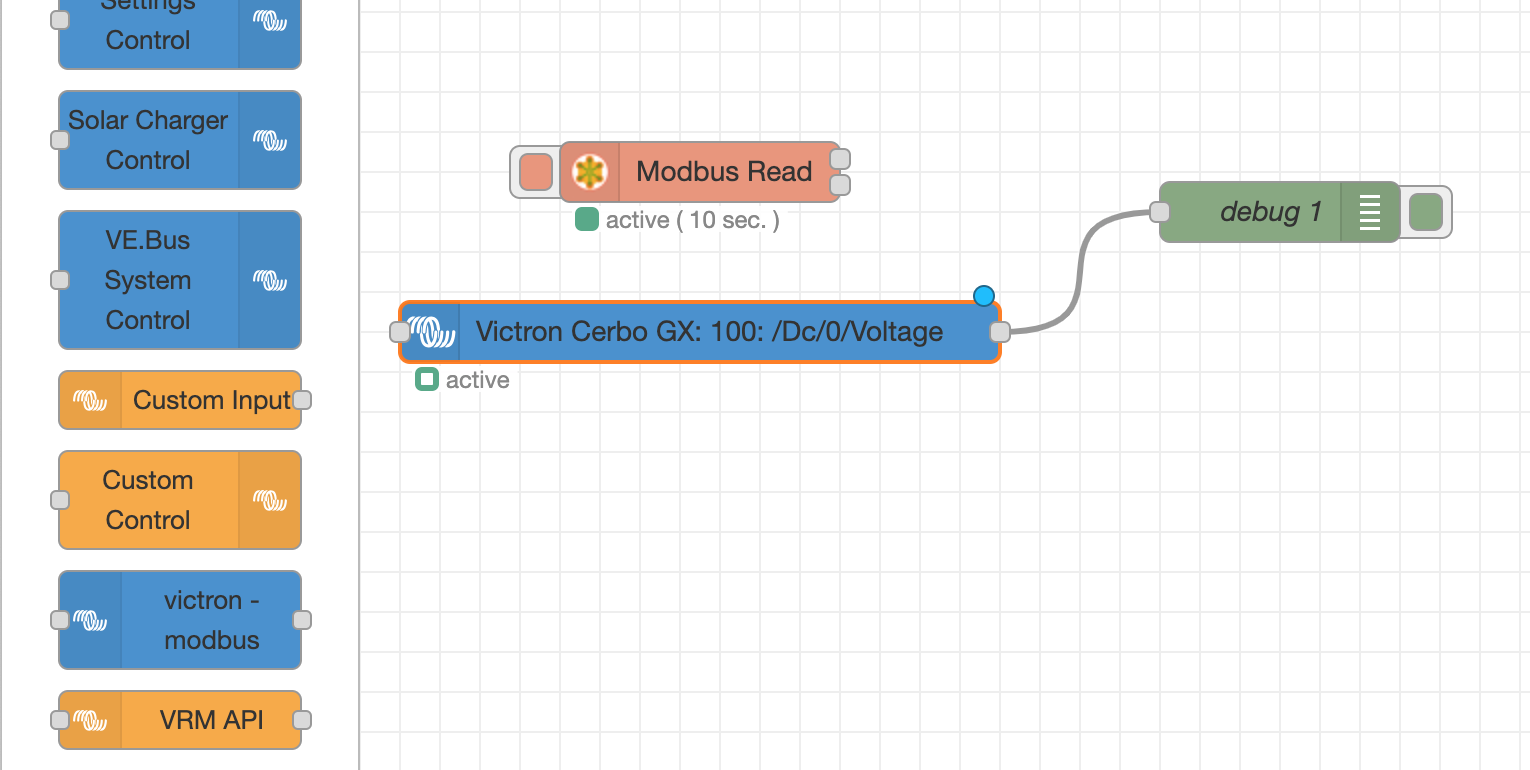
That’s the baseline. What’s changed is that Victron has been steadily expanding what these small computers can actually do, and one of the more significant additions is Node-RED — an open-source, browser-based automation platform that’s become a serious tool in the industrial and home-automation world well beyond solar. Peak Power has been using Node-RED for about two years now, building automations on top of the systems we install, and it’s opened up capabilities that a standard GX setup simply doesn’t offer out of the box.
What this means practically in Nepal
There are a couple of use cases that stand out as genuinely useful here.
The first is advanced generator control. Where a generator has the right integration hardware, Node-RED lets us control it over the network directly, which means we can build sophisticated start/stop logic based on what the solar and battery system is actually doing at that moment — rather than a simple timer or a basic low-battery trigger. That’s a meaningful step up in how tightly a generator can be coordinated with the rest of the system.
The second is load control, which is becoming increasingly important in Nepal as more sites move to hybrid and battery-backed systems. By integrating network-connected relays into the distribution side, we can control loads based on signals coming directly from the power system. A hot water system is a good example: we can wire it to a network relay that closes once the battery is fully charged, letting surplus solar power heat water instead of going to waste, and opens again if the battery starts to drop — protecting it from being drained by that load. The same approach extends to more sophisticated load control, diversion loads, and system protections generally.
Built for maintenance, not just design
One practical detail worth noting: the Node-RED design environment is served locally, straight off the network on the GX device itself. That means maintenance personnel can log in and update or debug a flow on-site at any time, without needing to reach back to us. We can also access and operate it remotely over a secure channel when that’s the more practical option.
It’s also worth mentioning that Node-RED has a large library of existing integrations — for all sorts of hardware, and increasingly for working alongside AI agents for coding and testing, which has opened up a lot of new possibilities for how these automations get built and maintained going forward.
None of this replaces the core engineering of a well-designed solar and battery system. But it’s a good example of how the platform underneath our installations keeps getting more capable — and why we’ve invested the time in learning it properly rather than leaving that capability on the table.