

Worth a quick note on something new in the Victron ecosystem: Click & Design, an online tool for building and simulating 48V ESS (Energy Storage System) designs before they’re installed.
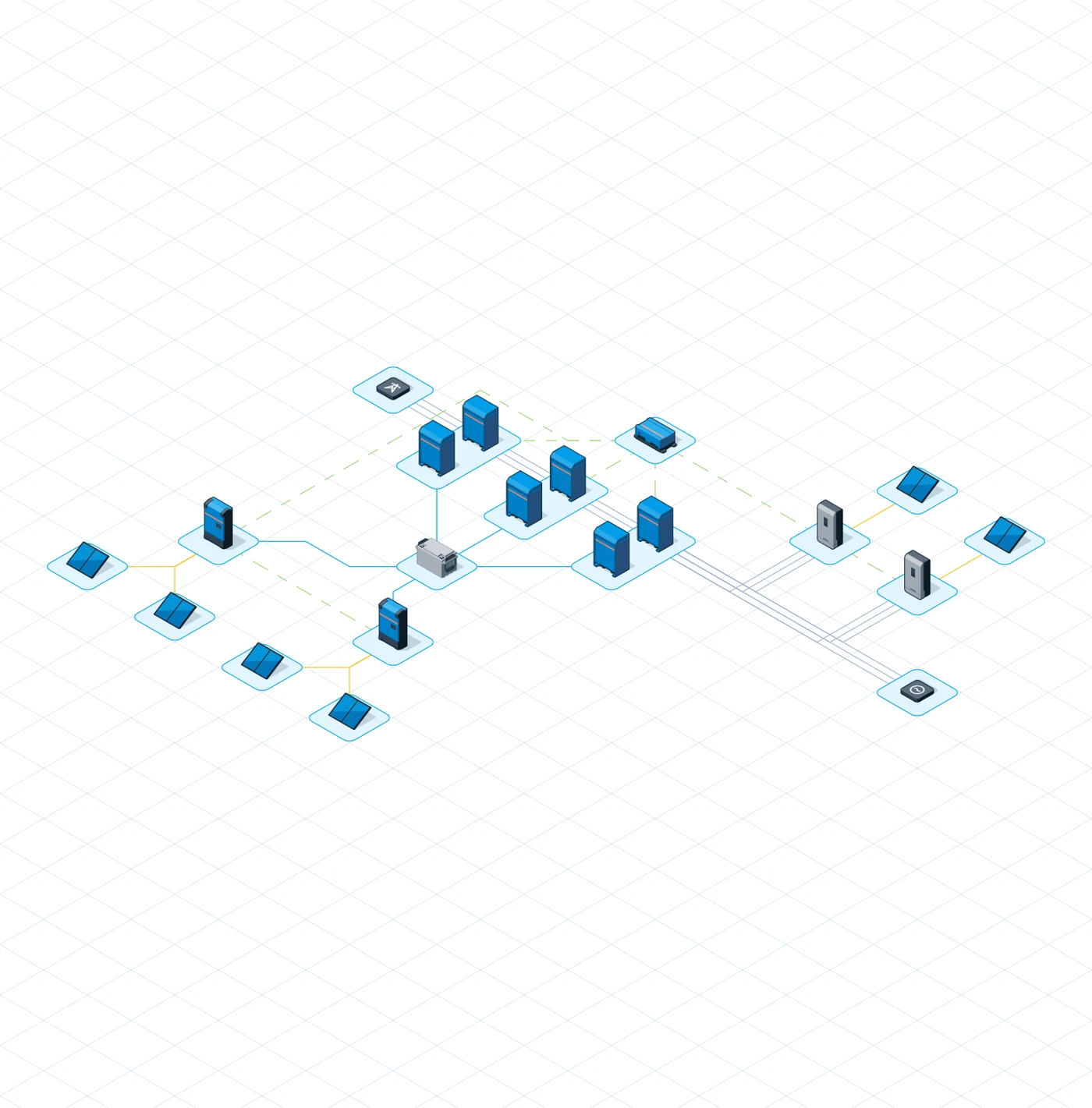
To be clear up front — this isn’t a tool we hand to customers. It sits on Victron Professional, behind a professional login, and it’s built for installers designing a system, not for browsing or self-service quoting. We’re covering it here because it’s a genuinely useful addition to how a system gets designed before anyone shows up on site, and it’s worth explaining what it actually does.
What it does
Click & Design walks through building a system in seven stages — site location, choosing a Multi RS or MultiPlus-II with MPPT as the base, AC input, priority and non-priority loads, PV array layout (orientation and tilt), and battery configuration. Once the design is built, it simulates performance hour-by-hour over a full year using real historical solar data for the site’s location, rather than a single peak-day estimate. Designs are saved automatically and can be revisited, adjusted, or duplicated to compare different configurations side by side, and a detailed report can be exported as a PDF.
It’s important to be clear about what this tool is not. Victron is explicit that it’s not a sizing tool that recommends components for you — it doesn’t tell you what to buy. It’s a simulation tool: you design the system, and it shows you how that specific design would actually have performed against a real year of solar conditions, including how much shortfall would need to come from the grid if the design doesn’t fully cover the load. That distinction matters for how we use it — it’s a way to pressure-test a design before committing to it, not a substitute for the engineering judgment that goes into sizing a system in the first place.
A recent update also expanded the range of systems it can model — parallel configurations of up to 4 inverters per phase (up to 12 in a three-phase system), including the MultiPlus 20k, which makes it possible to simulate systems up to roughly 240 kW.
Why it’s useful to us specifically
For a company doing everything from single-panel residential jobs to institutional and multi-cluster systems, having a way to simulate a design against a full year of real solar data before it’s built is a meaningful check — it catches an undersized array or an optimistic load assumption at the design stage, on a screen, rather than after installation on a remote site where a return visit is expensive. It doesn’t replace the engineering-grade sizing work Peak Power already does on every project; it’s an additional verification step layered on top of it.
If you’re a Peak Power customer, you won’t be logging into this yourself — but it’s part of why the system design you get from us has already been checked against real performance data before we ever put a panel on your roof.